
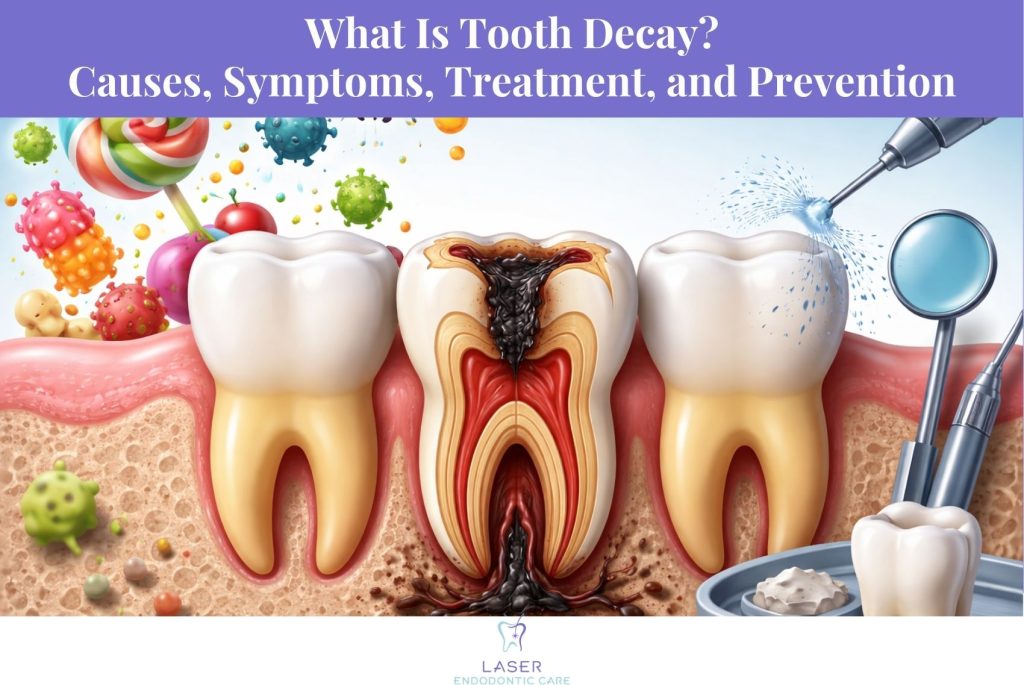
Tooth decay is one of the most common dental health issues affecting people of all ages. While it often begins quietly, untreated decay can lead to pain, infection, and even tooth loss. Understanding what tooth decay is, how it develops, and how it is treated can help you protect your smile and your overall oral health.
At Laser Endodontic Care LLC, we specialize in diagnosing and treating dental infections caused by tooth decay using advanced endodontic and laser technology to help preserve your natural teeth whenever possible.
What Is Tooth Decay?
Tooth decay occurs when bacteria in the mouth produce acids that gradually wear away the protective enamel of a tooth. Over time, this damage can progress deeper into the tooth, affecting the dentin and eventually the pulp—the innermost part that contains nerves and blood vessels.
If decay reaches the pulp, it can cause significant pain, infection, and abscess formation, often requiring specialized endodontic treatment such as root canal therapy.
How Does Tooth Decay Develop?
Tooth decay is a gradual process that typically occurs in the following stages:
- Plaque Formation
Plaque is a sticky film of bacteria that forms on teeth when sugars and starches from food are not properly cleaned away. - Enamel Breakdown
Bacteria in plaque produce acids that erode tooth enamel, leading to early decay. - Dentin Damage
Once enamel is compromised, decay spreads more rapidly into the softer dentin layer. - Pulp Infection
When decay reaches the pulp, inflammation and infection occur, often causing pain and sensitivity. - Abscess Formation
If left untreated, infection can spread beyond the tooth root into the surrounding bone.
Common Causes of Tooth Decay
Several factors increase the risk of tooth decay, including:
- Poor oral hygiene habits
- Frequent consumption of sugary or acidic foods and drinks
- Dry mouth or reduced saliva flow
- Infrequent dental checkups
- Cracked, damaged, or worn teeth
- Existing dental restorations that have failed
Signs and Symptoms of Tooth Decay
Early tooth decay may not cause noticeable symptoms. As it progresses, you may experience:
- Tooth sensitivity to hot, cold, or sweet foods
- Toothache or spontaneous pain
- Visible holes or dark spots on teeth
- Pain when chewing
- Swelling or tenderness in the gums
- Bad breath or unpleasant taste
If you notice any of these symptoms, prompt evaluation by a dental professional is essential.
How Is Tooth Decay Treated?
Treatment depends on how advanced the decay is:
- Early-stage decay may be managed with fluoride treatments or fillings
- Moderate decay often requires a dental restoration to remove damaged tissue
- Advanced decay involving the pulp typically requires root canal therapy
At Laser Endodontic Care LLC, we use advanced diagnostic tools and laser-assisted techniques to precisely remove infection, reduce discomfort, and help preserve natural teeth whenever possible.
Preventing Tooth Decay
Prevention is the best defense against tooth decay. Key preventive measures include:
- Brushing twice daily with fluoride toothpaste
- Flossing daily
- Limiting sugary and acidic foods and beverages
- Drinking plenty of water
- Scheduling regular dental checkups
- Addressing cracked or damaged teeth promptly
Frequently Asked Questions (Q&A)
Q: Is tooth decay reversible?
A: Very early decay affecting only the enamel may be slowed or reversed with fluoride and improved oral hygiene. Once decay progresses beyond enamel, professional treatment is required.
Q: Does tooth decay always cause pain?
A: No. Early decay often has no symptoms. Pain typically occurs once decay reaches deeper layers of the tooth.
Q: Can tooth decay lead to infection?
A: Yes. Untreated decay can lead to pulp infection, abscesses, and potentially serious complications if bacteria spread beyond the tooth.
Q: Will I always need a root canal for tooth decay?
A: Not always. Root canal therapy is only necessary when decay reaches the pulp. Early detection can prevent the need for more complex treatment.
Q: Are root canals painful?
A: Modern root canal treatment is designed to relieve pain, not cause it. With advanced techniques and laser technology, most patients experience minimal discomfort.
Q: How long does treatment take?
A: Treatment time varies depending on severity. Many root canal procedures can be completed in one or two visits.
Q: Why choose an endodontic specialist?
A: Endodontists have advanced training in diagnosing and treating tooth pain and infections, helping to save natural teeth with precision and care.
Contact Laser Endodontic Care LLC
If you are experiencing tooth pain, sensitivity, or signs of tooth decay, early evaluation is key to saving your tooth.
Laser Endodontic Care LLC
📍 8133 Leesburg Pike, Suite 610 (Tysons Corner)
Vienna, VA 22182
📞 Phone: (703) 448-8433